
Last Updated: October 30, 2026
Quick Summary
To choose timeless home decor, start with a neutral foundation of warm whites, stone, oatmeal and soft greys, then layer in character through smaller pieces you can change over time. Keep walls, floors and your largest furniture in classic colours and durable finishes, and treat trends as a low-cost seasonal layer rather than a commitment.
- Apply the 60/30/10 rule: one colour leads at about 60 per cent of visible surface, a second at 30, an accent at 10.
- Hold paint or fabric samples against the floor and largest furniture in daylight, not shop downlights.
- Keep no more than about one fifth of a room's visible decor from the seasonal trend layer.
- Spend first on the sofa, bed and main storage, since they are used daily and last longest.
- Favour natural materials like timber, stone, linen and wool, which develop character rather than wear out.
Table of Contents
- Start With a Neutral Foundation, Then Add Character
- Timeless Decorating Ideas That Work in Any Room
- Timeless Colour Schemes for Home: Neutrals, Navy and Black and White
- How to Mix Timeless and Trendy Decor Without Regret
- Choosing Home Decor That Lasts: Materials, Construction and Care
- The Trend Test: Will This Piece Still Work in Five Years?
- Budget Tiers and What to Prioritise First
- Build Your Timeless Home with AVE-BA HOUSE
- Frequently Asked Questions
Start With a Neutral Foundation, Then Add Character
The fastest way to choose timeless home decor is to build on a neutral base first.
Neutral does not mean bland. It means adaptable.
A neutral base lets you swap a cushion, throw or lamp without repainting, and makes colour choices easier because you are adding to a quiet backdrop rather than fighting one.
Start with the big surfaces: walls, floors and your largest furniture, kept in classic colours and durable finishes. Then layer in character through smaller pieces you can change over time.
- Walls: warm white, stone or soft greige
- Floors: timber, stone or a neutral rug
- Main furniture: linen, wool or leather in muted tones
Timeless Decorating Ideas That Work in Any Room
Timeless decorating ideas share one trait: they solve a practical need and look good doing it. They are not tied to a season or a trend cycle.
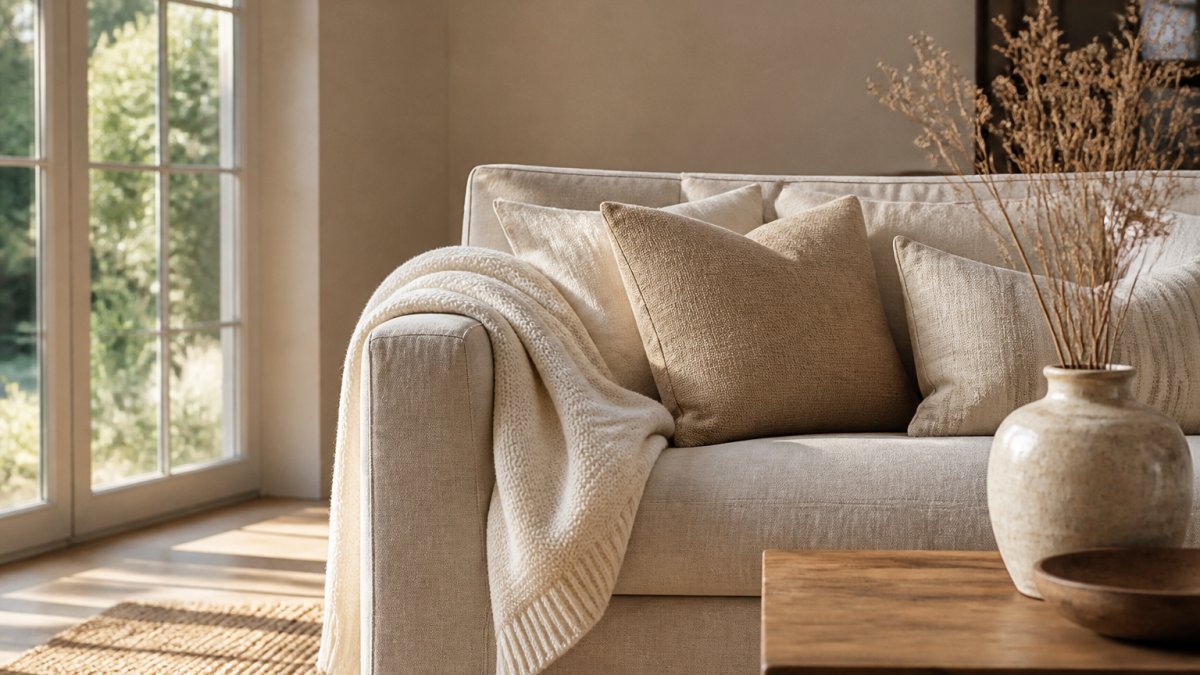
A common mistake is buying decor for how it looks in a photo, not for how it lives in your home. Timeless decorating ideas start with function and comfort, then add beauty.
Living Room: Anchor, Layer, Edit
The living room is where timeless home decor earns its keep. Anchor the room with one solid piece, layer in texture and softness, then edit out anything that does not belong.
Anchor with your largest piece: a sofa in a classic shape and neutral fabric. For practical guidance on how to style cushions on a sofa, see our full guide.
A textured throw is the easiest way to add warmth without committing to a colour. The Kelly Throw in Honey Gold or Ivory is one option. The Kelly Throw in Honey Gold or Ivory is one option.

Bedroom: Calm Colours, Tactile Layers
The bedroom works best when it stays calm. Keep colours soft and muted, then add comfort through tactile layers: a knit throw, linen bedding, a wool rug.
A common mistake is over-decorating the bedroom. Fewer, better pieces create a calmer space. A single throw folded at the end of the bed often does more than a shelf of ornaments.
Small Spaces and Rentals: Fewer, Better Pieces
Small spaces and rentals reward a fewer, better approach: choose pieces that do more than one job, and avoid anything needing permanent changes to walls or floors. Our guide to decorating small apartments on a budget shares budget-friendly tactics that support this approach.
- Use a throw as both a blanket and a colour accent
- Choose furniture that fits the room's scale
- Keep colours light to make the space feel larger
Timeless Colour Schemes for Home: Neutrals, Navy and Black and White
The most reliable timeless colour schemes for home are neutrals, navy, and black and white. Each has survived decades of changing taste because it is easy to live with and adapt. What separates a scheme that still looks considered in ten years from one that feels flat is the proportion you give each colour, the undertone you choose, and how the scheme responds to the light in the room.
The 60/30/10 rule, applied
A workable default is one colour leading at roughly 60 per cent of the visible surface, a second supporting it at about 30 per cent, and an accent taking the remaining 10 per cent. It is a rule of thumb, not a regulation, but it stops the common failure where a room has equal amounts of three colours and no clear hierarchy.
- Neutrals: walls and large furniture at 60 per cent, timber and stone at 30 per cent, one accent colour at 10 per cent
- Navy: keep walls and floors neutral at 60 per cent, bring navy in through a sofa, joinery or rug at 30 per cent, and use brass, tan leather or a warm white at 10 per cent
- Black and white: white walls and ceilings at 60 per cent, black frames, hardware or a rug at 30 per cent, and a warm texture such as linen or wool at 10 per cent to stop the scheme feeling clinical
Get the undertone right before the colour
Neutrals are not interchangeable. A warm white with a yellow or pink undertone sits comfortably with timber, brass and oatmeal; a cool white with a blue or grey undertone suits stone, chrome and cooler greys.
A practical check: hold your paint or fabric sample against the floor and the largest piece of furniture in daylight, not under the shop's downlights.
Room-by-room application
- Living room: warm white walls, a stone or oatmeal sofa, timber side tables, and navy or black confined to one or two accents such as a frame or a cushion
- Bedroom: soft greige walls, white or oatmeal linen, and a single darker tone in a throw or headboard rather than across the whole room
- Kitchen: white or stone cabinetry with timber or stone surfaces, and black reserved for hardware and tapware rather than splashbacks
Where each scheme tends to fail
- Neutrals fail when every surface is the same mid-tone and there is no contrast in texture or value. Add one darker anchor, such as a timber floor or a charcoal rug, to give the eye somewhere to rest.
- Navy fails when it covers every wall in a room with limited natural light, where it can read as heavy rather than deep. Keep it to joinery, upholstery or a rug in darker rooms.
- Black and white fails when the ratio is close to 50/50, which produces a harsh, graphic look that dates faster than either colour alone. Let white dominate and use black for structure.
The key is proportion and consistency. Let one scheme lead, keep undertones in the same family, and use the others as accents. A neutral room with a navy throw and a black frame will always feel considered; a room with equal parts of all three rarely does.
How to Mix Timeless and Trendy Decor Without Regret
You can mix timeless and trendy decor without regret if you treat trends as a controlled experiment rather than a commitment. Most advice stops at 'keep trends small', true but not actionable.
The trend trap is buying a whole room around one passing look; when the trend fades, the room feels dated and reversing it is costly.
The two-layer method
- Permanent layer: sofa, bed, rug, lighting, curtains, large joinery and wall colour. These should be chosen as if trends did not exist.
- Seasonal layer: cushions, throws, vases, artwork, small lighting and tabletop objects. This is where trends belong, because the cost of changing them is low and the effort is minimal.
A useful discipline is to set a rough ratio: no more than about one fifth of a room's visible decor should come from the seasonal layer at any one time. That leaves room for personality without letting a trend take over.
A trend-safety test you can run in the shop
Before buying a trend-led piece, score it against four questions. A piece that fails two or more is better left on the shelf.
- Does it depend on a specific colour or motif? Trends built on a distinctive colour or pattern date faster than trends built on a shape or texture. A bouclé chair will outlast a chair in a trend-specific shade.
- Can it move to another room? If a piece only works in one spot, it is a fixture, not decor. Pieces that can migrate between rooms hold their value longer.
- Is the cost low enough to replace without resentment? A trend is fine at the price of a cushion or a throw. It is a risk at the price of a sofa.
- Would it look right in a neutral room with no other trend pieces? If it only works alongside other items from the same trend, it is a costume rather than a choice.
Trends that tend to age better than others
Some trends are structurally safer because they are variations on classic forms rather than departures from them. A curved sofa, a fluted timber detail or a warm metallic finish are adjustments to shapes and materials in use for decades. A trend built on a very specific motif, a novelty shape or a saturated colour is more likely to look tied to a moment.
How to edit a trend back out
When a trend has run its course, the seasonal layer makes the exit simple. Remove the trend-led cushions, throws and objects, return the permanent layer to its neutral state, and the room resets without repainting or replacing furniture.
This is why a curated space looks better than a trend-driven one. Read more on why curated decor looks better.
Choosing Home Decor That Lasts: Materials, Construction and Care
Choosing home decor that lasts comes down to three things: the material, how it is made, and how you care for it.
Materials That Age Well
Natural materials age well because they develop character rather than wear out. Timber, stone, linen and wool all improve with time when looked after.
- Hardwood and timber gain a patina and can be refinished
- Stone and marble are durable and easy to clean
- Linen and natural fabrics soften with every wash
Synthetic materials often look tired faster: they can pill, fade or lose shape. For pieces that last, favour natural fabrics and solid construction.
Maintenance, Repair and Lifecycle
- Wash natural fabrics on a gentle cycle and air dry where possible
- Rotate cushions and throws so they wear evenly
- Store seasonal pieces clean and dry
Watch out: cheap textiles with loose seams often cost more over time because they need replacing sooner. For a deeper guide to spotting signs of high quality home textiles before you buy, see our full article. Check stitching and fabric weight before you commit.
The Trend Test: Will This Piece Still Work in Five Years?
Ask three questions before buying any trend-led piece. If it passes all three, it will likely still work in five years.
- Would it look right in a neutral room? If it only works with one specific look, skip it.
- Could you move it to another room? Pieces that only suit one spot are a risk.
- Is it cheap enough to replace? Trends are fine in small, low-cost items.
This is the practical test for whether a trend will age well. Timeless home decor passes all three. Trendy decor often fails the first.
Budget Tiers and What to Prioritise First
Spend most of your budget on the pieces you use every day and keep the longest. Prioritise in this order:
| Priority | What to Buy | Why It Matters |
|---|---|---|
| First | Sofa, bed, main storage | Used daily, lasts longest |
| Second | Rug, lighting, curtains | Sets the room's tone |
| Third | Throws, cushions, accents | Easy and cheap to change |
Throws sit well in the third tier, since they let you refresh a room's feel without a big spend. The Moss Border Throw ($91.00) and Transfer Marled Throw ($91.00) both add texture.


Build Your Timeless Home with AVE-BA HOUSE
Building a timeless home is a series of small, considered choices, not one big spend. Start with a neutral base, choose natural materials, and let trends play a small part.
The AVE-BA HOUSE collection is made to belong, with pieces intended to suit a calm, sophisticated space.
Frequently Asked Questions
What makes home decor timeless?
Timeless home decor usually rests on three things: a restrained colour palette, natural or durable materials, and shapes that aren't tied to a single season. A neutral sofa, a timber side table, linen cushions or a cotton knit throw tend to stay relevant because they don't rely on a loud motif or a very specific trend. When you're choosing, ask whether the piece would still look at home if you removed every other decorative item around it. If the answer is yes, it's likely to age well.
What colours work best for timeless colour schemes for home?
Neutrals, navy, black and white, and soft stone or sand tones do most of the heavy lifting. These colours let texture and shape carry the room rather than pattern alone. A practical approach is to pick one dominant neutral for walls and large furniture, one deeper accent such as navy or charcoal, and one warm tone for throws, cushions or timber. That combination gives you enough contrast to avoid a flat look while keeping the palette flexible if you later swap accessories.
How can I mix timeless and trendy decor without it looking dated?
Keep trends to the smaller, easier-to-change layers: a cushion, a vase, a lamp or a seasonal throw. Spend the bulk of your budget on the pieces you'll live with for years, such as seating, rugs and storage. A useful rule is to let no more than about a fifth of a room's visible decor be trend-led at any one time. If a trend stops feeling right, you can remove it without unsettling the rest of the scheme, and your foundation pieces keep doing the work.
How do I choose home decor that lasts beyond a season?
Check construction before you check colour. Look for tight seams, even stitching, secure zips and fabrics with a bit of weight, then read the care label to confirm the piece can be washed or spot-cleaned in a way you'll realistically maintain. Natural materials such as cotton, linen, timber and stone tend to show wear gracefully rather than failing suddenly. Ask how a piece is repaired if something goes wrong, and favour designs with removable covers or replaceable parts so a small fault doesn't retire the whole item.
Choosing timeless home decor takes patience, but the payoff is a home that feels right for years. AVE-BA HOUSE can help you get there with a curated collection of textured throws and considered pieces, each made to belong in your space. Explore the range, start with one piece, and build from there. Get started with AVE-BA HOUSE and create a home that lasts.
