
Table of Contents
- Why Curated Decor Looks Better Than a Decorated Space
- How to Curate Home Decor: A Step-by-Step Method
- How to Make Home Decor Look Cohesive
- Decorating Mistakes That Make a Room Look Cluttered
- Curated Home Decor Ideas for Every Room
- Budget-Conscious Curation: Shopping With Intention
- Frequently Asked Questions
Last Updated: October 21, 2026
Why Curated Decor Looks Better Than a Decorated Space
A room filled with nice things can still feel wrong. The sofa is good, the cushions are good, the art is good, yet the space reads as noise rather than calm. That gap between "decorated" and "curated" is the whole story of why curated decor looks better. A curated space is one where every object earns its place through intention, not accumulation. Below, we'll show you exactly how to move from one to the other, room by room.
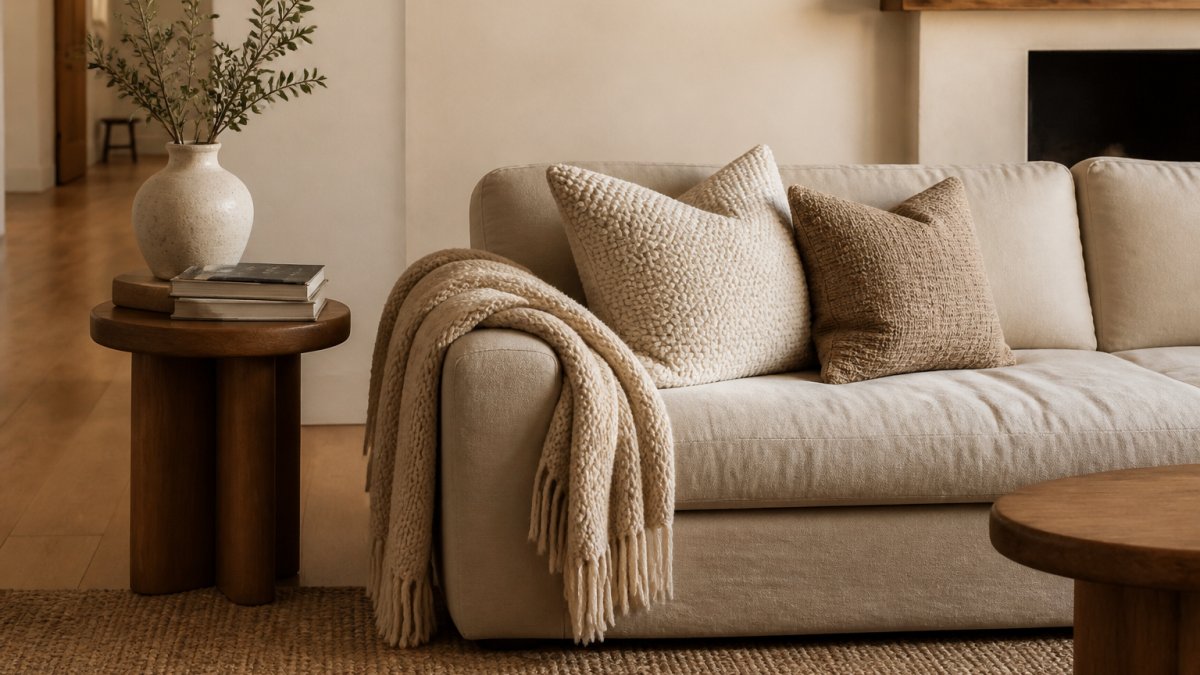
The Difference Between Curated and Decorated
A decorated space is filled. A curated space is chosen. That is the cleanest way to say it.
Decorating often starts with a shopping list and ends when the surfaces are covered. Curation starts with a question: what does this room need to do? The answer shapes everything that follows.
Here is how the two approaches split in practice:
- Decorated: buys per item, fills gaps, follows trends, adds when bored
- Curated: buys per plan, leaves gaps, follows a vision, edits when tempted
- Decorated: every surface has something on it
- Curated: some surfaces stay empty on purpose
The result is a different feeling. Curated rooms feel calm and finished. Decorated rooms often feel busy but incomplete. That tension is the heart of why curated decor looks better.
How to Curate Home Decor: A Step-by-Step Method
Learning how to curate home decor comes down to one sequence: assess, vision, edit, then buy. Most people run it backwards, buying first and hoping a look appears.
Step 1: Assess the room against its job. Before you move a single object, write one sentence describing what the room is for.
Step 2: Write a five-line vision. Name the mood, the main colours, the must-haves, and the avoid list. Keep it to five lines; anything longer stops being a filter.
Step 3: Empty one surface at a time. Clear a shelf, a side table, a console.
Step 4: Sort into three piles. Keep, store, and release. Keep only what you love or use weekly.
Step 6: Shop the list, not the sale. Buy only against your notes. If a sale item is not on the list, it is not a saving; it is a future edit.
Step 7: Style, live with it for a week, then adjust. Give the arrangement seven days of normal use before changing anything.
Start With a Design Vision
A design vision is a short written brief for a room. It names the mood, the main colours, and how the space should feel at 7pm on a Tuesday. Without it, every purchase is a guess.
Try this template:
Room: Living room. Mood: warm, quiet, lived-in. Palette: ochre, stone, sage. Must-haves: soft seating, one throw, two cushions, low lighting. Avoid: glossy finishes, bright patterns, crowded shelves.
Keep it to five lines. Anything longer stops being useful.
Edit Before You Add
The step most people skip is the edit. Before buying anything new, remove what is not working. A cluttered shelf will not improve with one more object on it.
Walk the room with a box. Anything you have not looked at in a year goes in. Store it for a month. If you do not miss it, it was never part of the room's story.
How to Make Home Decor Look Cohesive
To make home decor look cohesive, repeat a small set of colours, textures and finishes across the room. Cohesion is repetition with variation, nothing more. Pick three colours and two or three materials, then let every piece echo them.
Build a Colour Story and Mix Textures
A colour story is the fixed palette a room returns to. Choose one dominant colour, one supporting tone, and one accent. Then hold that line across cushions, throws, art and ceramics.
Texture does the rest. A room in flat fabrics looks dull even when the colours work. Mix a chunky knit with a smooth linen, a matte ceramic with a soft wool.
Our Geometric Cushion in Ochre pairs well with the Linen Leaf Throw in Mint and Natural for exactly this reason. The ochre warms the room, the mint cools it, and the knit adds depth a flat fabric cannot.


Decorating Mistakes That Make a Room Look Cluttered
The fastest way to make a room look cluttered is to treat every surface as storage. Clutter is rarely about too many things. It is about things with no relationship to each other.
These are the mistakes we see most often:
- Matching sets everywhere. A full matching suite looks like a showroom, not a home.
- Too many small objects. Ten tiny pieces read as mess. Three larger ones read as style.
- Ignoring scale. A tiny cushion on a deep sofa disappears. Size has to suit the furniture.
- No empty space. Every surface covered leaves the eye nowhere to land.
- Buying per trend. Trend pieces age fast and fight each other.
Curated Home Decor Ideas for Every Room
Good curated home decor ideas share one trait: they leave room to breathe. Curation is as much about what you leave out as what you put in.
Start with these room-by-room moves:
- Living room: one throw, two or three cushions, one large art piece, one object on the coffee table
- Bedroom: two cushions, one textured throw, soft lighting, clear bedside surfaces
- Entry: one tray, one bowl, one mirror, nothing else
- Dining: a single centrepiece, low enough to see over
Scale, Proportion and Negative Space
Scale is the size of an object against the furniture around it. Proportion is how those sizes relate across the room. Negative space is the empty area that lets both work.
A 45 × 45 cm cushion suits most standard sofas. A 125 × 150 cm throw drapes properly over an arm without pooling on the floor.
Negative space is not wasted space. It is what makes the chosen pieces visible. A wall with one strong piece beats a wall with six weak ones.
Budget-Conscious Curation: Shopping With Intention
A tight budget is an advantage in curation. It forces you to choose, and choosing is the entire skill. The mistake most people make is treating a small budget as a reason to buy many cheap things; curation rewards the opposite, fewer, better-chosen pieces that work with what you already own.
Set a Seasonal Cap, Not a Per-Item Cap
Per-item budgets encourage bargain hunting. A seasonal cap encourages planning. A workable rule is one new anchor piece per room, per season, plus a small allowance for replacement basics such as cushion covers or a lamp bulb. Write the cap down before you shop and treat it the way you would a grocery list: if it is not on the list, it waits until next season. This pace lets a collection build slowly and stops impulse buys that never quite fit.
Spend Where the Piece Is Touched
Prioritise quality where hands and bodies meet the object daily: seating, throws, cushions, bedding, and lighting switches. These are the pieces that show wear first and that you notice every evening. Save on objects that sit and look pretty, a ceramic bowl on a console does not need the same durability as a cushion you lean on.
Reuse Before You Buy
Before adding anything, shop your own home. Move a vase from the bedroom to the entry. Swap two cushions between rooms. Rotate art between walls. A surprising amount of "new" decor is existing decor in a better position. This is also the cheapest way to test whether a gap is real: if moving a piece solves the problem, you did not need to buy.
The Three-Tier Shopping Rule
When you do buy, sort every candidate into one of three tiers:
- Anchor pieces, the large, long-lived items that set the room's tone: a rug, a sofa, a major art piece, a statement lamp. Buy these last, once the vision is clear, and buy the best you can afford.
- Supporting pieces, throws, cushions, trays, ceramics. Buy these to echo the anchor, and replace them as seasons change.
- Filler, small trend items. Buy sparingly, or not at all. Filler is what makes a curated room drift back towards decorated.
| Approach | What It Costs | What You Get | Best For |
|---|---|---|---|
| Trend shopping | Low per item, high over time | Fast novelty, quick fatigue | Nothing long-term |
| Bulk buying | Medium | Volume, no cohesion | Temporary setups |
| Curated buying | Higher per piece | Longevity, a cohesive look | Rooms you live in daily |
Our Stripe Frill Cushion at $64 and Moss Border Throw at $91 are the kind of supporting pieces that anchor a slow build. They work with what you own now and with what you add next year, which is the test any supporting piece has to pass.

If you are not a design person, you do not need to hire one. Follow the assess, vision, edit, buy sequence and the room will come together, and your budget will go further because every dollar is aimed at a gap you identified rather than a sale you stumbled on.
Frequently Asked Questions
What does curated design actually mean?
Curated design means choosing each piece with a reason behind it, rather than filling a room with whatever catches your eye. Every cushion, throw and object earns its place by fitting your colour story, your scale and how you use the room. The result is a space that feels collected over time, with a cohesive look and visual balance, instead of a showroom of unrelated items. It is about thoughtful selection and intentional placement, not how much you spend.
How do I make my home decor look cohesive without buying everything new?
Start with what you already own. Pull out the pieces you genuinely love, group them by colour and texture, and remove anything that fights the overall look. Then repeat two or three colours and one or two materials across the room so everything connects. Adding one considered piece, such as a textured cushion in a shade already present in the space, can tie a whole corner together far more effectively than a full refresh.
Why does my decorated room still look cluttered?
Clutter usually comes from too many small items competing for attention, not from having too few. Decorating mistakes that make a room look cluttered include filling every surface, ignoring scale, and mixing too many colours and finishes at once. Try editing: clear each surface, keep one or two meaningful objects per zone, and leave negative space so the eye can rest. Fewer, larger, better-chosen pieces almost always look more refined.
How do I mix styles and textures without it looking messy?
Anchor the room with a consistent colour palette and a shared material or finish, then introduce contrast through texture and shape. For example, pair a smooth linen cushion with a chunky knit throw in related tones so the mix feels deliberate. Limit yourself to two or three styles, repeat key colours at least twice, and keep scale varied so larger statement pieces balance smaller accents. That balance of harmony and visual interest is what separates a collected look from a chaotic one.
Most homes do not need more things. They need fewer, better-chosen ones. That is the whole argument for curated decor, and it is why AVE-BA HOUSE builds pieces that are Made to Belong rather than made to fill a shelf. Start with one room, one vision, and one honest edit. Browse the AVE-BA HOUSE collection and choose the piece your space has actually been missing.