
Table of Contents
- Why Some Cushions and Throws Feel Cheap After a Month
- How to Identify High Quality Fabric at a Glance
- The Best Fabrics for Cushions and Throws
- Stitching, Seams and Finishing: Where Quality Shows
- How to Choose a Throw Blanket That Lasts
- How to Care for Cushions and Throws So They Stay Soft
- Misleading Marketing: What the Labels Don't Tell You
- How to Inspect High Quality Home Textiles Before You Buy
- Frequently Asked Questions
Last Updated: October 18, 2026
Why Some Cushions and Throws Feel Cheap After a Month
Most cushions and throws don't fail dramatically. They go limp, pill, or lose their shape so gradually you barely notice until the sofa looks tired. The cause is almost always the same: a low-quality yarn, a loose weave, or a seam that was never built to take pressure. Understanding the signs of high quality home textiles before you buy is the difference between a throw that survives three winters and one that looks worn by February. At AVE-BA HOUSE, we curate pieces made to belong in a room for years, not a season, and that starts with knowing what separates a well-made textile from a convincing imitation.
How to Identify High Quality Fabric at a Glance
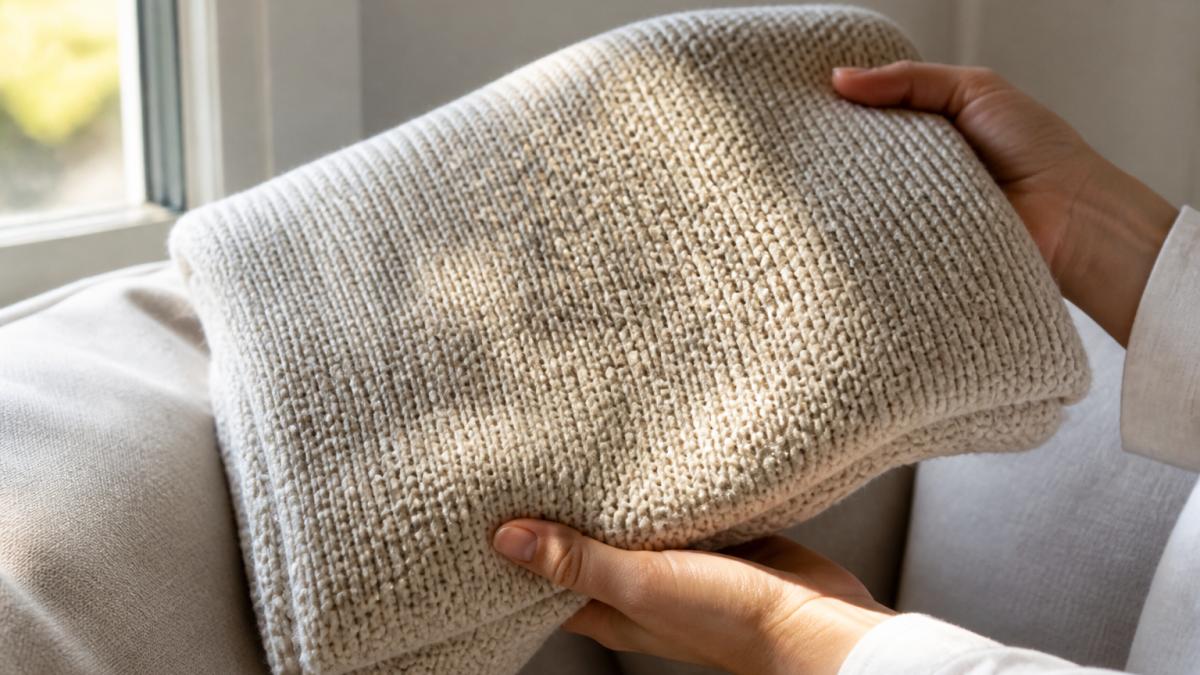
High quality fabric reveals itself through weight, drape, and surface texture before you ever check a label. A good textile feels denser than it looks and holds its shape when folded rather than collapsing into a limp pile.
Weight, Drape and Hand Feel
Pick up a throw and let it hang. Quality fabric falls in soft, even folds rather than bunching or sticking out stiffly. A dense knit feels substantial in the hand without being heavy, and it springs back when you squeeze it. If a cushion feels hollow or the cover slides loosely over the insert, the fabric is too thin for the job.
Weave Density and Stitch Count
Hold the fabric up to a light. A tight, consistent weave blocks most of it; a loose one lets light pour through gaps between yarns. Run your fingers across the surface and look for even stitches with no skipped threads or loose loops. Uneven tension is the earliest warning sign of a textile that will distort after washing.
The Best Fabrics for Cushions and Throws
Natural fibres outperform synthetics for cushions and throws because they breathe, age gracefully, and resist the static and pilling that plague cheap blends. The best fabrics for cushions and throws are cotton, linen, and wool, each suited to a different role in the room.
Natural Fibres Compared: Cotton, Linen and Wool
| Fibre | Best For | Feel | Care Demand |
|---|---|---|---|
| Cotton knit | Throws, everyday cushions | Soft, breathable, holds colour | Machine washable, low fuss |
| Linen | Cushion covers, summer throws | Crisp, cool, softens with age | Wrinkles easily, gentle wash |
| Wool | Winter throws, textured cushions | Warm, dense, naturally resilient | Hand wash or dry clean |
Cotton is the workhorse: a fine-gauge cotton knit gives warmth without weight, which is why our Multi Dog Throw works across seasons. Linen brings texture and a relaxed, lived-in look. Wool delivers the density and loft that make a winter throw feel genuinely luxurious.

Stitching, Seams and Finishing: Where Quality Shows
Turn any cushion or throw inside out before you commit. The hidden side tells you more about construction than the display face ever will. Look for seams that are double-stitched with tight, even tension, and edges that are bound or overlocked rather than left raw. On a cushion, check that the zip is set into a proper placket and that the insert fills the cover corner to corner. On a throw, examine the tassels or fringing: quality finishing knots each one securely, while cheap versions unravel within weeks.
How to Choose a Throw Blanket That Lasts
Choosing a throw blanket that lasts comes down to three checks: fibre, knit density, and size relative to how you use it. A throw you drape over a sofa needs enough weight to stay put; one you wrap around yourself needs softness and breathability.
Start with the fibre and confirm it suits your climate and washing habits. Next, stretch a section of the knit gently between your hands: it should recover, not stay stretched. Finally, check the dimensions. A generous throw covers a sofa seat properly, while a smaller one suits an armchair or a bed end. Our Moss Border Throw at 125 × 150 cm is sized to drape a standard sofa without pooling on the floor.

How to Care for Cushions and Throws So They Stay Soft
Caring for cushions and throws properly extends their life more than any other single habit. Wash less often than you think, use a gentle cycle with low spin, and dry flat rather than tumbling, which breaks down fibres and encourages pilling. Rotate cushions regularly so they wear evenly, and plump inserts by hand to restore loft. Store wool throws folded with a breathable cover rather than sealed in plastic.
Misleading Marketing: What the Labels Don't Tell You
Labels are written to sell, not to inform. "Premium" and "luxury" carry no legal definition, and a high thread count means little if the yarn is thin or the weave is loose. Watch for vague fibre blends that hide a small natural-fibre content behind a synthetic majority, and be sceptical of softness that comes from chemical finishing rather than the fibre itself. The most reliable signal is still the fabric in your hands.
How to Inspect High Quality Home Textiles Before You Buy
Whether you shop in person or online, inspect high quality home textiles the same way: check fibre content, examine construction, and confirm the return terms before committing. In store, turn the item inside out, hold it to the light, and squeeze it. Online, read the full fibre and care listing, look for close-up photography of seams and texture, and check the returns policy so you can assess the piece in your own space.
At AVE-BA HOUSE, every piece is chosen with these checks in mind, from the fine 20-gauge softness of our Geometric Cushion in Ochre to the vintage-toned cotton knit of our Kelly Throw. Each is made to belong, so you can build a room that feels considered rather than assembled.

Frequently Asked Questions
How can you tell if home textiles are good quality?
Look at four things: fabric weight and drape, weave density, seam finish, and fibre content. A quality throw should feel substantial in the hand and hold its shape when folded. Check that seams are straight, stitched with a consistent tension, and finished on the reverse side. Read the fibre label, because natural fibres like cotton, linen and wool tend to age better than loose synthetic blends. These signs of high quality home textiles show up before you wash anything, so inspect carefully in store or request close-up photos online.
What fabrics are best for cushions and throws?
Cotton knits and woven linen are the best fabrics for cushions and throws you plan to use daily. Cotton is breathable, washes well and resists pilling when the yarn is long-staple. Linen gets softer with every wash and handles warmth without trapping heat. Wool and wool blends add warmth for winter throws but need gentler care. Polyester blends can look plush at first but often pill and flatten faster. Match the fabric to how you will use the piece, not just how it looks on the shelf.
How can you check fabric quality before buying online?
Ask three questions before you order. First, request a close-up photo of the weave and a shot of the reverse side, which reveals seam quality. Second, check the listed fibre composition and weight in grams per square metre if it is published. Third, look for a care label and a returns policy you can actually use. A retailer that publishes clear specifications and accepts returns for change of mind is usually more confident in the product. Avoid listings that only show styled lifestyle photos with no detail shots.
What should you look for in cushion stitching and seams?
Run your finger along the seam. Quality cushions use a straight, evenly tensioned stitch with no puckering or loose threads. Look for a concealed zip rather than an envelope back if the cover is removable, and check that the zip is set into a bound seam so it does not pull. On piped cushions, the piping should sit flat with no ripples. Turn the cushion over and inspect the reverse, because that is where rushed manufacturing shows first. Weak seams split within months of regular use.
How do you know if a throw will stay soft after washing?
Fibre and yarn length decide this more than any marketing claim. Long-staple cotton and quality wool keep their softness because short fibres are less likely to work loose and pill. Check the care label: a throw that allows a gentle machine wash at 30 degrees and flat drying is easier to keep soft than one that demands dry cleaning only. Avoid high heat in the dryer, which shrinks and roughens natural fibres. Following the care instructions for cushions and throws matters more than any single fabric choice.
How should you care for cushions and throws to make them last?
Wash less often but more gently. Shake cushions weekly to redistribute the filling, and spot clean marks before they set. When you do wash, use a cold or 30 degree cycle with a mild detergent and skip fabric softener, which coats fibres and reduces breathability. Dry flat in shade rather than tumble drying, and store throws folded rather than hanging so the knit does not stretch. Rotating cushions between seats spreads wear evenly and keeps the covers looking newer for longer.
The challenge with home textiles is that quality is invisible until it fails, and by then you've already lived with the disappointment. We built AVE-BA HOUSE around pieces that hold up: a curated collection of textured cushions and throws, each chosen for its fibre, construction, and how it settles into a room. Explore the collection and find the pieces made to belong in your space.