
Last Updated: October 26, 2026
Quick Summary
To buy unique handmade cushion covers, check the weave, fibre label and maker before you pay: tight twill, herringbone or jacquard weaves resist pilling, and a specific fibre percentage beats a vague cotton-look claim. Match the cover to your insert size, then confirm the workshop or artisan behind it.
- Tight twill, herringbone and jacquard weaves resist pilling and hold shape better than open weaves.
- A cover should measure the same as the insert or 1-2 cm smaller for a fuller look.
- Treat cotton-look and cotton-feel labels as warnings, since they usually mean a synthetic blend.
- Hand wash or spot clean pom trims and fringes, because machine agitation loosens them.
- Ask the seller who made the cover and where before paying a premium for provenance.
Table of Contents
- Why Unique Handmade Cushion Covers Change a Room
- Handwoven Cushion Covers and the Weaves Worth Paying For
- Textured Cushion Covers That Add Depth Without Clutter
- Natural Fibre Cushion Covers: What to Check Before You Buy
- Custom Cushion Covers, Sizing and Insert Fit
- How to Verify Artisan Quality and Ethical Sourcing
- Caring for Handmade Cushion Covers by Material and Trim
- Choosing Your AVE-BA Cushion Pairing
- Frequently Asked Questions
Why Unique Handmade Cushion Covers Change a Room
A cushion is the cheapest design decision in the room and the one visitors notice first. We treat handmade cushion covers as the piece that stops a sofa looking like a showroom and starts it looking like a home.
Handmade cushion covers are removable fabric covers cut, sewn and finished by hand or in small artisan batches, rather than stamped out on a mass-production line.
Below, we break down how to buy unique handmade cushion covers without wasting money on pieces that pill, sag or date within a season. For styling ideas on placing them in a living room, see our unique cushions for living room guide.
Handwoven Cushion Covers and the Weaves Worth Paying For
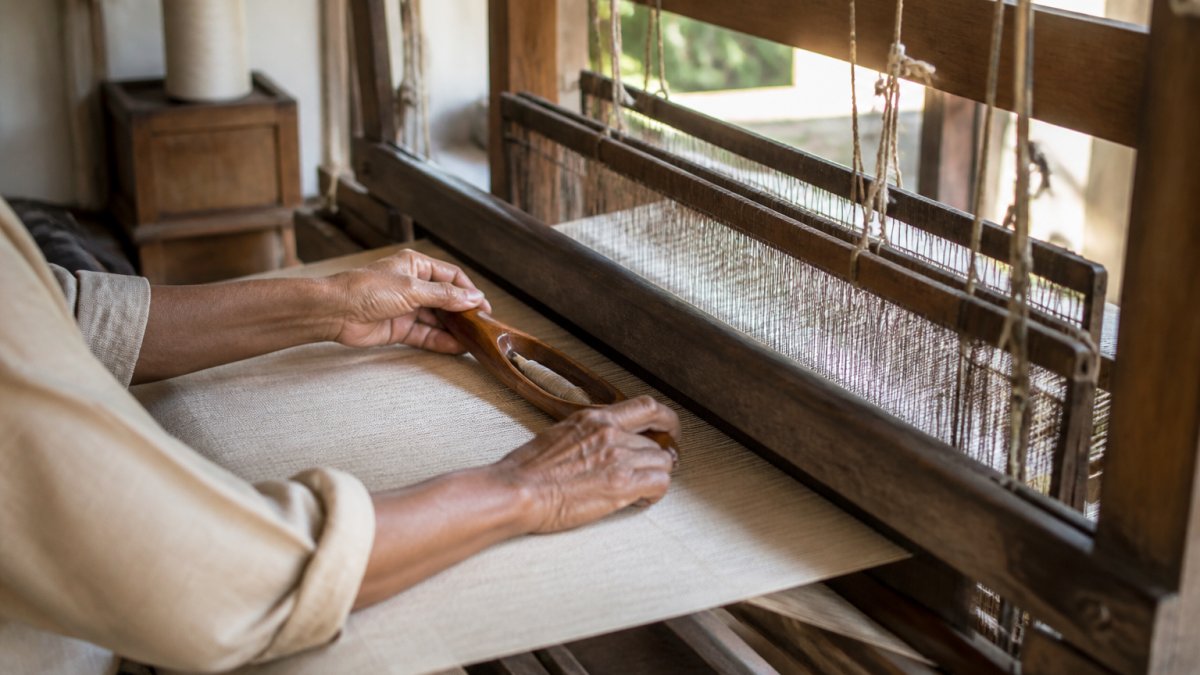
Weave quality is the single best predictor of how a cushion cover will look after two years. Handwoven cushion covers built on a plain or twill weave hold shape and resist stretching.
Three weaves earn their price:
- Twill and herringbone, tight, diagonal structure that resists pilling and hides wear.
- Basket and rib weaves, visible texture that adds depth without pattern.
- Jacquard, pattern woven into the cloth rather than printed on top, so it survives washing.
Watch out: open-weave covers snag on jewellery and pet claws. Tight weaves forgive far more.
Textured Cushion Covers That Add Depth Without Clutter
Texture is how you make a neutral room feel layered without adding colour or clutter. Our approach: one smooth base, one mid-weight texture, one statement detail per seating arrangement.
Textured cushion covers work because they change with the light. The TRNS Pom Cushion is a good example of the principle, round and pom-trimmed in stone, natural and pink, at $52.00.

The mistake most guides miss: piling on five heavily textured cushions. Two textured pieces against three plain ones reads calm. Five reads chaotic, and you feel it every time you sit down.
Natural Fibre Cushion Covers: What to Check Before You Buy
Natural fibre cushion covers age gracefully, but the fibre mix decides how they wear, how often you wash them, and how long they hold their shape.
Fibre-by-fibre trade-offs:
- 100% cotton, the default for good reason. It is durable, machine washable, and softens with every wash. Tightly woven cotton holds shape for years; loosely woven cotton can stretch at the seams. Expect it to crease, and expect the colour to soften slightly over time. Best for everyday sofas and high-traffic living rooms.
- Linen and linen blends, beautiful drape and a cool hand, but linen creases readily and needs a gentle wash. A linen-cotton blend gives you most of the look with less creasing and better abrasion resistance. Best for low-traffic rooms and decorative layering rather than daily lounging.
- Recycled fabrics, a sound environmental choice, but recycled yarns vary in strength. Check that the weave is tight and the cover is lined; unlined recycled weaves can pill faster than virgin cotton. Best where sustainability is a priority and you are prepared to wash inside out on a cold cycle.
How to read a fibre label:
- Look for a percentage, not just a name. "Cotton" on its own is vague; "100% cotton" or "60% cotton, 40% linen" tells you what you are actually buying.
- Treat "cotton-look" and "cotton-feel" as warnings. These usually mean polyester or a synthetic blend. It feels slick, traps heat, and pills faster than cotton.
- Check the lining. A lined cover resists stretching and protects the insert.
- Match the fibre to the room. High-traffic family sofas want tight-weave cotton or a cotton-linen blend; decorative bedroom cushions can afford linen, wool, or delicate weaves.
What affects price: Fibre type is the biggest driver. Cotton sits at the accessible end; linen, wool, and handloomed recycled blends cost more because the yarn and the weaving time cost more. A higher price is only justified if the label is specific and the weave is tight, a vague label at a high price is a red flag, not a guarantee.
Watch out: hot water and a tumble dryer shrink cotton and mat down natural textures. Whatever fibre you choose, air drying is a good habit for keeping a handmade cover looking new.
Custom Cushion Covers, Sizing and Insert Fit
Custom cushion covers work best if the cover matches the insert. As a rule, the cover should measure the same as the insert, or 1-2 cm smaller for a fuller look.
Standard sizes to know:
- 45 × 45 cm, the classic square, suits most sofas.
- 35 × 50 cm and 35 × 60 cm, lumbar shapes for lower-back support.
- 30-35 cm, accent rounds and small squares.
Measure your insert flat, seam to seam, not corner to corner. If you are weighing a lumbar shape, the Herringbone Fringe Lumbar Cushion at 35 × 60 cm shows how a rectangle sits against a standard sofa arm.

A practical sizing check:
| Cover size | Insert size | Result |
|---|---|---|
| 45 × 45 cm | 45 × 45 cm | Standard fit |
| 45 × 45 cm | 50 × 50 cm | Plump, firm look |
| 35 × 60 cm | 35 × 60 cm | Clean lumbar line |
| 30 cm round | 30 cm round | Compact accent |
How to Verify Artisan Quality and Ethical Sourcing
"Handmade" and "ethically made" are among the most overused phrases in home textiles. Some listings use them precisely; others use them as decoration. The difference matters because you are paying a premium for labour and provenance. For a deeper guide to spotting high-quality home textiles, read our signs of high quality home textiles guide.
Decode the claim before you trust it:
- "Handloomed in small batches", specific and verifiable. It tells you the cloth was woven on a handloom, that production runs are limited, and usually that a named workshop is involved. Ask which workshop.
- "Hand-finished", means the final seams or trims were done by hand, not that the whole cover was. Useful, but narrower than it sounds.
- "Artisan-inspired", tells you nothing about who made it. Treat it as a design description, not a provenance claim.
A verification checklist you can run in five minutes:
- Does the listing name the fibre and the weave?
- Is the maker, workshop, or region identified?
- Are seams double-stitched and finished inside, with no raw edges?
- Does the trim attach securely, with no loose threads or glue visible?
Questions worth asking a seller directly:
- Who made this cover, and where?
- What fibre and weave is it, in percentages?
- How should it be washed, and will the trim survive a machine cycle?
- What is your returns policy if the colour or size is wrong?
A seller who answers these clearly is usually a seller worth buying from.
Why this matters for handmade covers: Handmade production means variation, slight differences in dye lot, weave density, and trim placement are normal and are part of what makes each piece unique. The goal is not perfect uniformity; it is knowing that the variation comes from a real maker rather than from a listing that cannot name one.
Caring for Handmade Cushion Covers by Material and Trim
Care depends on the fibre and the embellishment, not just the colour. Get this wrong and a good cover is ruined in one wash.
- 100% cotton, cold machine wash, gentle cycle, line dry in shade.
- Recycled fabrics, cold wash inside out to protect the surface.
- Pom trims and fringes, hand wash or spot clean; machine agitation loosens trim.
- Embroidered details, turn inside out, use a mesh bag, never tumble dry.
Watch out: hot water and a tumble dryer shrink cotton and mat down textured trims.
Choosing Your AVE-BA Cushion Pairing
Most people do not need a designer; they need a rule. Our approach is simple: pick one anchor, one texture, one accent, and let the sizes do the rest. For practical guidance on arranging your pairing, see how to style cushions on a sofa.
Our recommended pairings:
- Warm and grounded: Geometric Cushion in Ochre ($60.00, 45 × 45 cm) with a Moss Frill Lumbar in Mustard/Natural ($54.00, 35 × 50 cm).
- Cool and calm: Stripe Frill Cushion in Blue/Natural ($64.00, 45 × 45 cm) with a Herringbone Fringe Lumbar ($57.00, 35 × 60 cm).
- Soft and modern: Animal Print Cushion in Stone/Natural ($57.00) with a Plain Pom Lumbar in Blush ($67.00, 35 × 70 cm).
- Compact spaces: Knot Band Cushion ($70.00, 30 cm) and TRNS Pom Cushion ($52.00, 35 cm) for small sofas and reading chairs.
Frequently Asked Questions
What makes a cushion cover handmade?
A cushion cover counts as handmade when a person, not a machine line, does the skilled work: cutting, sewing, weaving, embroidery, fringe or pom finishing. Look for visible variation in stitching and trim, a maker or workshop named on the product page, and construction details described in plain terms. Many handmade cushion covers combine milled fabric with hand-finished embellishment, so ask which parts are hand-done. If a seller cannot explain that, treat the handmade claim with caution.
How can I tell if handmade cushion covers are good quality?
Check four things: seams (straight, reinforced, no loose threads), the zip (concealed and stitched flat), trim attachment (fringe and pom rows secured, not hanging by a thread), and fabric weight (holds shape when you scrunch it). Ask about the closure and whether the cover is dry-clean or machine washable. A seller who lists exact sizes, filling type and care steps is usually the one making a better product.
How do I choose cushion covers that suit my sofa?
Match scale to seat width. A two-seat sofa suits two 45 x 45 cm squares plus one 35 x 50 cm lumbar; a three-seater takes three squares and two lumbar cushions. Keep to two or three colours pulled from your existing room, and vary texture rather than pattern. For a compact apartment, one square and one lumbar per seat is enough. Measure your sofa's back height first so the cushions sit upright rather than slumping.
How should I wash and care for handmade cushion covers?
Turn covers inside out, close the zip, and use a cold, gentle cycle only if the care label allows machine washing. Fringe, pom and knot details are safer hand-washed or spot-cleaned. Air dry flat, away from direct sun, and reshape while damp. Never tumble dry trims. If a cover has no care label, treat it as dry-clean only.
What size cushion insert should I use for a cushion cover?
Use an insert the same size as the cover for a soft, relaxed look, or 2 to 5 cm larger for a fuller, tailored finish. A 45 x 45 cm cover takes a 45 cm or 50 cm insert; a 35 x 50 cm lumbar takes a 35 x 50 cm insert. All AVE-BA cushions are supplied with polyester filling, so sizing is already matched. If you swap inserts, choose one with the same dimensions to avoid corners folding inward.
The hardest part of buying handmade is trusting what arrives. We built AVE-BA HOUSE around pieces that are "Made to Belong", with a curated collection of textured cushions and throws in natural tones that work together rather than compete. Explore the full cushion range, compare sizes and colours, and build a pairing that suits your space. Get started with AVE-BA HOUSE and refresh your living room with pieces made to stay.
