
Last Updated: October 23, 2026
Quick Summary
Unique cushions for living room styling transform your space by layering a three-cushion foundation in complementary colours with smaller patterned or textured accents in front, using a 60-30-10 colour ratio and keeping patterns to one-third of your total cushions for a composed, intentional look.
- Start with three 45 × 45 cm cushions as your foundation, evenly spaced along the sofa back
- Add smaller 35 cm round or lumbar cushions in front to create depth and introduce pattern or texture
- Use the 60-30-10 rule: roughly 60 per cent dominant colour, 30 per cent secondary, and 10 per cent accent
- Keep patterns to no more than one-third of your total cushions to avoid a busy appearance
- Mix textures strategically with roughly half smooth cushions, a third mid-texture, and one or two high-texture accents
Table of Contents
- Why Unique Cushions Transform Your Living Room
- How to Arrange Cushions on a Sofa for Maximum Impact
- Cushion Sizes for Sofa: Getting the Proportions Right
- Cushion Colour Combinations for Living Room Success
- Mixing Cushion Patterns Without Clashing
- Fabrics and Textures That Add Sophistication
- Caring for Your Cushions to Maintain Quality
- Frequently Asked Questions
Why Unique Cushions Transform Your Living Room
Your living room tells a story about who you are, and unique cushions for living room styling are one of the fastest ways to refresh that story without replacing everything.
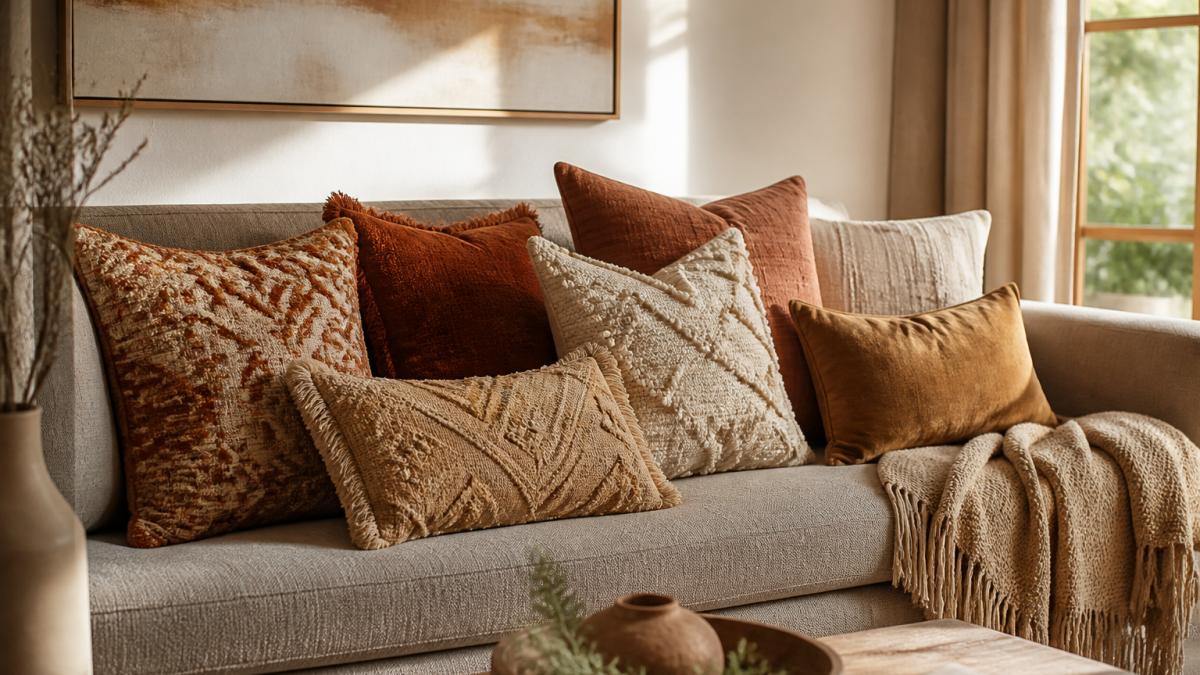
A well-styled sofa with thoughtfully chosen cushions changes how a room feels, creating a space that reflects your taste and invites people to stay longer.
The challenge most people face isn't finding cushions, it's knowing which ones work together.
How to Arrange Cushions on a Sofa for Maximum Impact
The way you arrange cushions determines whether your sofa looks intentional or accidental. Use a simple framework: start with a foundation, then layer for depth.
The Three-Cushion Foundation
Begin with three cushions as your base, evenly spaced along the back to create visual rhythm. Use your largest cushions here, typically 45 × 45 cm squares, which anchor the look and provide actual comfort for leaning back.
For the foundation, choose cushions in complementary but not identical colours. The 2025 research on interactive room design preferences suggests that varied shapes and textures within a cohesive colour story create visual interest without chaos.
This is your colour story's opening chapter: if your foundation is warm neutrals, everything that follows should feel intentional within that warmth.
Layering and Depth
Once your foundation is set, add a second layer, where unique cushions for living room styling really shine.
Use this layer to introduce pattern or texture: a striped cushion, fringed accent, or embroidered detail works here because it's supported by the calm foundation behind it, so the room reads as composed rather than chaotic.
Add a third layer if your sofa is deep enough. This is where your animal print or bold patterned cushion belongs.

Cushion Sizes for Sofa: Getting the Proportions Right
Size matters more than most people realise: a 45 × 45 cm cushion overwhelms a small loveseat but disappears on a large sectional.
For a standard three-seater sofa, use three 45 × 45 cm cushions as your foundation.
For a smaller two-seater or loveseat, reduce to two 45 × 45 cm cushions and one 35 cm accent.
The rule is simple: back cushions should be roughly one-third the width of your sofa, and accent cushions smaller, drawing attention without dominating.
Cushion Colour Combinations for Living Room Success
Colour is where most people hesitate, but the solution isn't to play it safe, it's to use a repeatable framework for how many colours to use, in what proportion, and in what order.
The 60-30-10 Rule for Cushions
A common pattern among interior stylists is to divide the visual weight of a cushion arrangement into three parts: roughly 60 per cent dominant, 30 per cent secondary, and 10 per cent accent. On a sofa with six cushions, that means about four in your dominant colour, two in your secondary, and one small accent that carries the boldest tone.
The dominant colour should echo something already in the room, your rug, wall, or artwork, so the arrangement feels connected. The secondary adds contrast without competing, and the accent is where you can be adventurous because it occupies the smallest area.
Undertones Decide What Works Together
Colours clash most often because their undertones disagree, not because the colours themselves are wrong. Warm tones (rust, terracotta, camel, ochre) share yellow or red undertones; cool tones (stone, sage, blue-grey) share blue or green undertones.
A practical test: hold two cushion covers side by side in daylight, not under warm indoor lighting. If one makes the other look muddy or grey, their undertones are fighting. If they look richer together, they share an undertone family.
Three Worked Palettes
Warm and grounded. Foundation in camel or taupe, secondary in terracotta, accent in rust. This works in rooms with timber furniture and warm lighting.
Calm and contemporary. Foundation in stone or cream, secondary in sage, accent in a single ochre or rust cushion. This suits smaller rooms because the neutral base keeps the space feeling open while the accent adds personality.
High contrast. Foundation in cream or natural linen, secondary in charcoal or navy, accent in a single bold tone such as mustard.
What to Avoid
Avoid giving equal visual weight to three or more strong colours, because when every cushion is a statement the sofa reads as busy rather than curated. Also avoid matching cushions exactly to your wall colour, which makes the arrangement disappear into the background.
Once your palette is set, texture becomes the variable that keeps the arrangement from looking flat, which is where the next section comes in.
Mixing Cushion Patterns Without Clashing
Pattern mixing intimidates most people. The secret isn't avoiding patterns, it's using the right ratio.
The Pattern-to-Plain Ratio
A simple rule: no more than one-third of your cushions should be patterned. If you have six cushions total, only two should have bold patterns. The rest should be solid or subtle textures.
This ratio keeps your sofa composed: the eye rests on solid cushions while patterns add interest without visual noise. Start here, then adjust to your comfort level.
Pairing Stripes, Prints, and Textures
Think about scale. If one pattern is small-scale (fine stripes, delicate print), pair it with a larger-scale pattern or a solid. If both patterns are bold and large-scale, they compete for attention.
Texture counts as pattern in this framework. A fringed cushion, an embroidered cushion, and a smooth cushion create visual interest through variety without clashing.
Fabrics and Textures That Add Sophistication
The fabric you choose matters as much as the colour, but it also determines how the cushion wears, cleans, and survives daily use, so treat fabric as both a visual and a practical decision.
Match the Fabric to the Room's Use
A living room used mainly by adults for occasional seating can carry delicate fabrics such as linen blends, embroidered cotton, or velvet. A room used daily by children or pets needs tighter weaves and removable, washable covers. A common pattern is to reserve the more delicate textures for higher, less-touched cushions and keep the seat-level cushions in durable, washable covers.
Texture Ratios That Read as Intentional
Just as pattern benefits from a ratio, so does texture. A workable approach is to make roughly half your cushions smooth or low-texture, a third mid-texture (linen weave, subtle embroidery, fine ribbing), and one or two high-texture accents (fringe, faux fur, chunky knit, pom-poms). This gives the eye variety without visual noise, and it keeps the high-texture pieces feeling special rather than crowded.
Fabric-by-Fabric Trade-offs
Linen and linen blends. Cool, crisp, and breathable, with a relaxed look that softens with washing.
Cotton and upcycled cotton. Durable, easy to wash, and widely available in tight weaves that resist pilling.
Velvet and velour. Rich depth of colour and a soft hand, but they show crushing and pet hair.
Faux fur and boucle. High tactile appeal and warmth, but they trap dust and need more frequent brushing.
Embroidered and fringed finishes. These add detail and movement, but fringing can snag and embroidery can pill with friction.
Inserts and Fill
Most quality cushions use polyester filling because it holds shape and resists flattening, and it suits households that want low-maintenance care. Whichever you choose, a slightly overfilled insert keeps a cover looking crisp, while an underfilled one looks slouchy, so match the fill to the look you want.
Care and Durability by Fabric
Always check the care label before washing. Many covers are spot-clean or gentle hand-wash only, and some fabrics require dry cleaning. Rotate cushions every few months to spread wear, steam out creases gently, and store off-season covers in a breathable bag away from direct sunlight, because UV exposure fades warm tones such as rust and terracotta fastest.
When colour and texture are working together, the arrangement looks considered rather than decorated, and the cushions earn their place as a long-term part of the room rather than a seasonal purchase.
Caring for Your Cushions to Maintain Quality
Beautiful cushions deserve proper care.
Check the care label before washing: some fabrics require dry cleaning, others tolerate gentle hand washing in cool water.
Rotate your cushions every few months to prevent uneven wear and maintain shape, and gently steam out wrinkles without damaging the fabric.
Store off-season cushions in a dry place away from direct sunlight, since UV light fades warm tones like rust and terracotta fastest.
When you invest in unique cushions for living room styling, proper care extends their life significantly, keeping them beautiful for years.
| Arrangement Principle | Application | Expected Result |
|---|---|---|
| Three-cushion foundation | Use 45 × 45 cm cushions evenly spaced on sofa back | Balanced, intentional look |
| Layering with smaller accents | Add 35 cm round or lumbar cushions in front | Visual depth and sophistication |
| Pattern-to-plain ratio | Keep patterns to one-third of total cushions | Composed, non-chaotic appearance |
| Colour palette consistency | Choose warm or neutral tones, add one accent colour | Cohesive, intentional styling |
| Texture variation | Mix smooth, fringed, and embroidered fabrics | Visual interest without clashing |
Our cushion collection is designed for styling flexibility. The Geometric Cushion in Ochre ($60.00) works beautifully as a warm foundation. The Stripe Frill Cushion ($64.00) introduces pattern without overwhelming. The Animal Print Cushion ($57.00) adds sophisticated texture. The TRNS Pom Cushion ($52.00) brings playful dimension.


Frequently Asked Questions
How many unique cushions should I put on a sofa?
Most sofas work best with three to five cushions, depending on length and seating depth. A standard three-seater sofa suits three to four cushions; a larger sectional can handle five or six. Start with an odd number for visual interest. The key is balance: too few leaves the sofa looking sparse, whilst too many overwhelm the space. Arrange them symmetrically or asymmetrically depending on your style preference and the sofa's shape.
What cushion colour combinations work best in a living room?
Warm palettes combining rust, terracotta, camel, and sage create an inviting atmosphere. Alternatively, layer neutral tones like stone, taupe, and natural linen for a sophisticated, cohesive look. The Geometric Cushion in Ochre ($60) pairs beautifully with neutral bases. Limit your palette to three main colours to avoid visual chaos. If your living room has existing furniture or artwork, pull colours from those elements to ensure harmony.
How do I mix patterned and plain cushions without them looking mismatched?
Follow the 60-30-10 rule: 60% plain or neutral cushions, 30% one pattern (such as stripes or animal print), and 10% a bold accent. The Stripe Frill Cushion ($64) works as your secondary pattern; pair it with solid pieces like the Geometric Cushion. Ensure all patterns share at least one colour to create visual cohesion. Texture adds depth without pattern clash, so combine smooth cotton with fringed or embroidered finishes.
What size cushions should I choose for my sofa?
Standard square cushions are 45 × 45 cm, ideal for most three-seater sofas. Smaller round cushions (35 cm, like the TRNS Pom Cushion at $52) work as accent pieces or for smaller seating. Lumbar cushions suit armchairs or as lower-back support on larger sofas. Measure your sofa's depth and width: cushions should fill about two-thirds of the seating area without overwhelming it. Mix sizes for visual interest, but keep the largest pieces as anchors.
